

Share this
by Minnesota Milk Producers Association on Sep 2, 2026, 1:07:56 PM
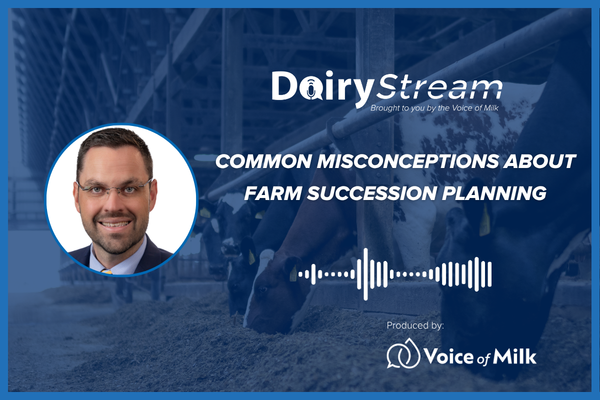
Succession planning is one of the most important conversations a farm family can have, yet it is also one of the most misunderstood. Many producers know they need a plan, but misconceptions about timing, fairness, ownership and family involvement often create roadblocks.
On a recent episode of Dairy Stream, attorney Will McKinley, president and CEO of Menn Law Firm, shared his perspective on the most common succession planning misconceptions he sees when working with farm families. His message was clear: successful transitions require early planning, open communication and a willingness to think differently than previous generations.
Misconception #1: We can transfer the farm the same way grandpa did
One of the biggest misconceptions McKinley encounters is the belief that each generation can simply repeat the succession plan used by the generation before them.
While that may have worked decades ago, today's farms face a very different environment. Land values have increased dramatically, farm operations are larger and more complex and tax laws have changed significantly. What worked for one generation may no longer be practical or financially advantageous for the next.
"Every transition is different," McKinley said. "The reality is it's often difficult, if not impossible, to replicate the exact same process generation after generation."
Misconception #2: Succession planning starts when you're ready to retire
Many producers wait until they are ready to retire before beginning succession conversations. According to McKinley, that's often too late.
The ideal time to begin discussing succession is five to ten years before a planned transition. Starting early creates opportunities to:
- Build tax-efficient transfer strategies
- Work with lenders on financing plans
- Develop management skills in the next generation
- Make gradual adjustments as circumstances change
"Time is always an asset when it comes to transition planning," McKinley explained.
Rather than asking when you'll retire completely, consider when you'd like to start slowing down. That milestone can serve as the starting point for building a transition plan.
Misconception #3: An estate plan is the same as a succession plan
Many farm families believe their estate plan is their succession plan. McKinley says that is one of the most common misunderstandings.
An estate plan only takes effect upon death. A succession plan, on the other hand, focuses on how ownership, management and responsibilities transition during a producer's lifetime.
Leaving the farm to a son or daughter in a will or trust is not a complete transition strategy. The next generation often needs clarity, responsibility and decision-making authority long before that estate plan is activated.
An estate plan is an important piece of the puzzle, but it should not be the entire plan.
Misconception #4: Fair means equal
Balancing inheritance among farming and non-farming children can be one of the most emotional aspects of succession planning.
McKinley encourages families to recognize that fairness and equality are not always the same thing.
While the farming heir may receive valuable land and assets, they also assume substantial responsibilities, including:
- Financial risk
- Debt obligations
- Management responsibilities
- Long work hours and lifestyle sacrifices
"The value on paper doesn't always reflect the burden that comes with owning and operating the farm," he said.
Families can explore creative solutions to provide non-farming heirs with value while preserving the operation's long-term viability. Common approaches include life insurance policies, rental income arrangements or ownership structures that allow non-farming heirs to benefit financially without disrupting the farm business.
Misconception #5: Sweat equity replaces wages
Many farm families assume that long hours and hard work by the next generation automatically translate into future ownership.
McKinley cautions against relying on unspoken promises.
If a successor is working on the farm, they should be compensated fairly for their labor. Ownership opportunities or future transition arrangements should be documented separately and clearly.
Without written agreements, misunderstandings can arise years later, particularly after the death of a parent or ownership change.
His advice is simple: document expectations early and often.
Misconception #6: Transferring ownership means giving up control
A common fear among senior generations is that transferring ownership means losing decision-making authority overnight.
In reality, ownership and control are not always the same thing.
With the right legal structure, farmers can begin transitioning ownership for tax and succession purposes while maintaining influence over key decisions.
McKinley encourages families to identify what truly matters most. In many cases, retiring owners discover there are only a few areas where they want ongoing involvement.
By focusing on those priorities, farms can gradually transfer management responsibilities while still providing peace of mind to the older generation.
Who should be involved in the process?
Succession planning is rarely a one-person conversation.
McKinley emphasized the importance of involving:
- Family members
- Spouses
- Lenders
- Accountants
- Attorneys
- Farm business consultants
One group that is frequently overlooked is the farm's lender. Bringing lenders into discussions early helps families avoid financing surprises and ensures the transition plan aligns with existing debt structures and borrowing capacity.
Consultants can also play a valuable role by helping families work through the emotional and organizational aspects of succession before legal and tax professionals step in.
Protecting the farm from the unexpected
Even the best succession plan can be disrupted by unexpected events such as:
- Divorce
- Death
- Disability
- Long-term care expenses
- Ownership disputes
McKinley recommends using tools such as:
- Prenuptial agreements
- Trusts
- Shareholder agreements
- Operating agreements
- Buy-sell agreements
These legal protections establish clear directions for what happens when unforeseen circumstances arise and help prevent situations that could threaten the farm's future.
Advice for the next generation
According to the 2022 Census of Agriculture, nearly one-third of U.S. farmers have farmed for 10 years or less. As younger farmers enter the industry, succession planning will become increasingly complex.
Today's farms are larger businesses than ever before, and ownership structures may include multiple family members, business partners or even non-family stakeholders.
For young farmers, McKinley's advice is straightforward:
Start planning early.
Whether ownership transitions to family members, business partners or a combination of both, early conversations provide the flexibility and time needed to create a durable plan.
The bottom line
Succession planning is rarely easy, but delaying the conversation only makes the process more difficult. Successful farm transitions require time, communication and a willingness to rethink old assumptions.
The most important takeaway from McKinley's discussion is simple: start sooner than you think you need to.
The earlier farm families begin their succession planning journey, the more options they will have to protect both the farm business and the relationships that make it successful for generations to come.